

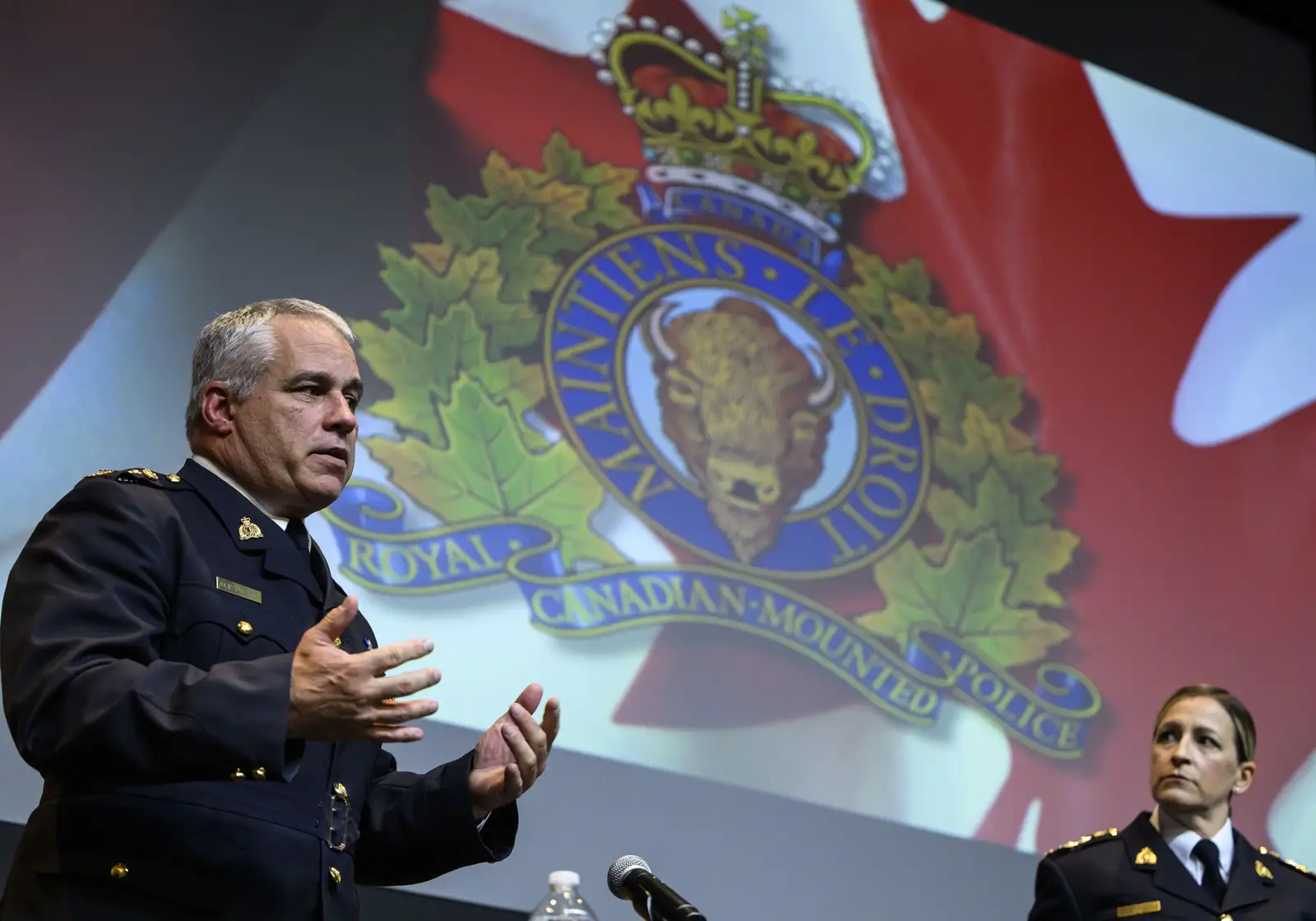


A classified Royal Canadian Mounted Police (RCMP) report has revealed that the Lawrence Bishnoi gang, designated as a terrorist organization in Canada, has been "acting on behalf of the Indian government" in targeting pro-Khalistan activists and conducting criminal operations across North America.
The internal RCMP document, obtained through Access to Information Act requests and released Monday, represents the most direct official acknowledgment of alleged coordination between Indian government agents and organized crime groups operating in Canada.
The three-page national security assessment describes the Bishnoi gang as a "violent criminal organization" with an "active, continually expanding presence" in Canada and other countries with significant Punjabi diaspora communities. The report states the group uses "violence to further their criminal enterprise, while acting on behalf of the Indian government."
Led by Lawrence Bishnoi, who has been imprisoned in India since 2015, the organization reportedly operates through associates like Goldy Brar (real name Satinderjeet Singh), who is believed to have assumed operational control. Despite Bishnoi's incarceration, the RCMP report indicates he "reportedly continued to run his organization while incarcerated."
The revelations come at a diplomatically sensitive time, as British Columbia Premier David Eby concluded a trade mission to India this week (January 12-17, 2026), and Prime Minister Mark Carney plans his own visit to India in the coming months. Both leaders are pursuing enhanced trade relationships to diversify Canada's economic partnerships amid uncertainty over U.S. trade policies under President Donald Trump.
The timing has drawn criticism from Sikh advocacy groups, who argue that Canadian officials are prioritizing economic interests over addressing India's alleged transnational repression campaign. "The RCMP and the government of Canada are clearly aware that the Bishnoi gang is operating in coordination with the government of India to target individuals in Canada," said Balpreet Singh, spokesperson for the World Sikh Organization of Canada.
The report directly references the June 18, 2023 assassination of Hardeep Singh Nijjar, a Sikh temple leader gunned down in Surrey, British Columbia. Nijjar, who advocated for Khalistan independence, had been labeled a "terrorist" by the Indian government. The RCMP document alleges that "agents of the Indian government were using 'organized crime groups like the Bishnoi group' to target leaders of the pro-Khalistan movement in Canada."
Canada designated the Bishnoi gang as a terrorist entity in September 2024, citing their involvement in "murder, shootings and arson" and their use of "extortion and intimidation" to create "a climate of fear" in Canadian communities. The organization is estimated to have approximately 700 members across several Indian states, with operations extending to North America, Europe, and Gulf states.
The diplomatic crisis between Canada and India escalated significantly in October 2024, when Canada expelled six Indian diplomatic officials following RCMP Commissioner Michael Duheme's public statement linking Indian officials to violent crimes in Canada. India reciprocated by expelling Canadian diplomats.
However, since becoming Prime Minister, Mark Carney has moved to restore diplomatic ties with India, viewing the relationship as crucial for Canada's economic diversification strategy. His approach has drawn criticism from Sikh community leaders who feel their safety concerns are being subordinated to trade interests.
The Indian High Commission in Ottawa has not responded to requests for comment regarding the RCMP allegations. The report's release coincides with ongoing investigations into multiple incidents of violence and extortion linked to the Bishnoi network across Canada, highlighting the persistent security challenges posed by transnational organized crime.


 Loading ...